As the countdown begins for the Fantasy Premier League (FPL) 2026/27 season, enthusiasts are eager to dive into preparations. The excitement surrounding FPL isn't just a weekend hobby; it represents a significant cultural phenomenon. Millions of fans worldwide engage in strategic planning, assessing player form, and ultimately trying to outperform their friends and rivals. As they gear up, FPL’s tools and resources become invaluable assets in their quest for glory.
To aid this preparation, we’ve introduced an FPL Draft page, enabling managers to start organizing their 15-player squads ahead of time! While official prices aren't available yet, we've generated some machine-learning predictions based on nearly 2,000 historical FPL price changes over the past five years. Machine learning has evolved into a powerful tool in sports analytics, allowing us to sift through vast datasets to identify trends and anticipate market movements. In the realm of FPL, this could prove to be a competitive advantage for those who can effectively interpret these predictions.
We’ll fine-tune some predicted values—like Marcos Senesi at £4.5m—over the next day to rectify noticeable discrepancies between predicted and actual perceived market value. The accuracy of these predictions hinges on the model's training data, which includes previous player transfers and performance metrics. But as any seasoned FPL player will tell you, unforeseen factors can drastically shift player prices, especially following key transfers or breakout performances. Predictive models, while sophisticated, aren't infallible—something every manager should keep in mind.
For those eager to challenge these predictions, there's an option to adjust any player’s price by clicking on their name. This feature empowers users to customize their squad according to their insights or intuition. And that’s the beauty of FPL: it often reflects the unpredictability of football itself. The ability to manipulate player prices also engages users more deeply, making them active participants in the drafting process.
GETTING READY FOR GAMEWEEK 1
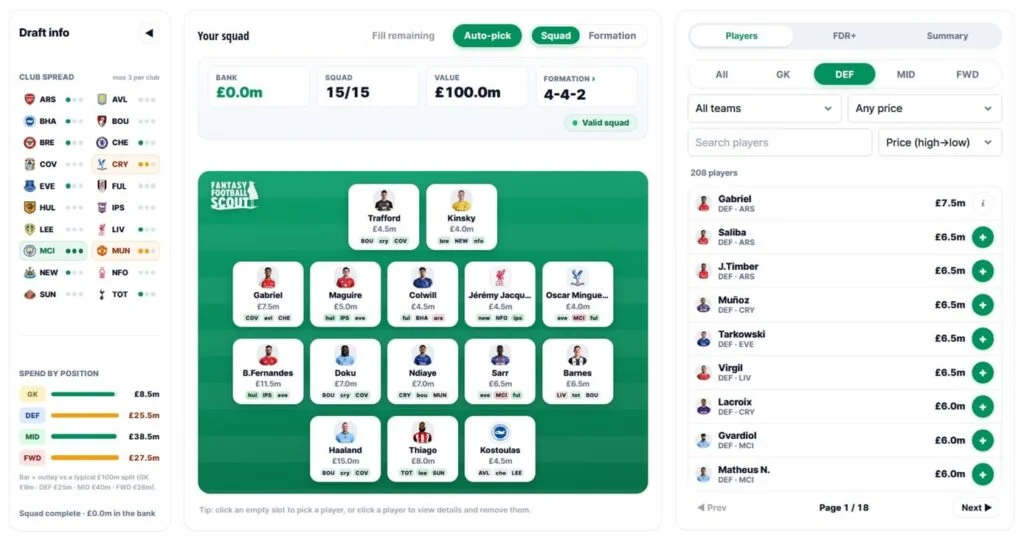
This tool is user-friendly, offering 15 squad slots and a £100 million budget, with features to sort players by position, price, or team. The intuitive interface is designed for both seasoned managers and newcomers. Adding players is easy with a simple click on the ‘plus’ button. This kind of user experience can be pivotal in keeping users engaged in what could otherwise be a repetitive process. If you’re working in this space, you know that even minor tweaks in user experience can lead to significantly enhanced engagement metrics.
On the left, you’ll find a visual representation of club coverage and budget allocation across four positions. A strategic view of your squad can help identify weaknesses early on. Plus, you can save multiple drafts under different names and personalize your selections with player images. Personalization has become increasingly important in digital products, and FPL’s ability to cater to individual preferences might be a key factor in retaining its loyal fanbase.
PREDICTING PRICES
Forecasting initial player prices can be tricky. This year’s adjustments follow significant transfers, like Mohamed Salah's departure from Liverpool, alongside debut campaigns that impact player valuations. Transfers can change not just the players' market valuations but also dramatically influence team dynamics and strategies. Managers need to be acutely aware of how these shifts affect not only individual player prices but also overall squad construction.
If you find disagreement with our model’s prices, don’t hesitate to make adjustments by clicking on a player, changing their value, and adding them to your squad. This interactive aspect creates an ongoing dialogue between the platform and its users, fostering a sense of community as players compare their valuations and strategies. It’s as if every user becomes a mini-analyst, giving them a stake in the game's unfolding narrative.
As we shift focus from the World Cup, now's the time to strategize for your FPL lineup for the upcoming season. The period immediately following major tournaments is often a hotbed of transfer activity and new player signings, making it ideal for getting in on the action early. This window can be pivotal in building a competitive squad before the prices stabilize, adding yet another layer of strategy to FPL preparation.
IMPLICATIONS AND FUTURE OUTLOOK
The launch of such tools ahead of the season reflects a broader trend in fantasy sports; technology continues to reshape how fans engage with their favorite games. Enhanced data analytics, artificial intelligence, and machine learning models are becoming integral to these experiences. As the competition intensifies, platforms that embrace technology will likely have a considerable edge. Football fans aren't just passive observers anymore; they’re deeply engaged strategists, and this shift won't reverse.
The importance of personalization can't be overstated either. As users increasingly expect tailored experiences, companies must continually innovate to meet these expectations. Look at the way FPL enables managers to experiment with different squad compositions and strategies, all while remaining connected to real-time football narratives. And this is the part most people overlook: the emotional investment in these games often runs parallel with the actual matches being played on the pitch.
The coming season poses challenges and opportunities. With a new wave of talent entering the league, alongside changing team dynamics, FPL managers must be prepared for everything. In a space where each decision could score precious points, being ahead of the curve is paramount. This is more significant than it looks: it’s not just about player stats; it’s about understanding market movements and fan sentiments.