by Sofascore
Overview of Nations League Fantasy
As Round 1 of Nations League Fantasy concludes, the focus inevitably shifts to the fixtures slated for Rounds 2 through 6. This moment serves as a pivotal junction for team managers aiming to refine their strategies and optimize player transfers. With the increasing popularity of fantasy sports, particularly in football, understanding fixture schedules becomes essential for success. Managers aren't just playing against each other; they're also contending with the unpredictable nature of player performances and fixture congestion. Those who plan ahead can gain a strategic advantage over their competitors.
Fixture Analysis for Rounds 2-6
The Sofascore Nations League Fantasy fixture ticker for Rounds 2-6 is an invaluable tool for discerning the best and worst match schedules. It highlights which teams have promising fixtures in the forthcoming rounds and which might lead managers to reconsider their selections. For example, clubs with easier matches often yield more points, making them prime candidates for roster inclusion. Conversely, tougher opponents can lead to low returns, which might result in lineup adjustments.
However, while analyzing these fixtures, it’s important to consider a variety of factors, including player form, injury statuses, and prior match results. For instance, a team facing a streak of strong opponents could still frustrate expectations if they’re in good form. Therefore, simply relying on fixture difficulty without a broader context can be misleading. Good managers will examine all angles and adapt swiftly.
Joining the Fantasy League Mini-League
The introduction of a dedicated mini-league for Nations League Fantasy adds an element of competition, not just for bragging rights but for real rewards. The prizes include attractive cash sums and subscription services, which create newfound motivation for participants. The competitive environment can elevate the entire gaming experience, pushing managers to engage more deeply with their selection processes.
As participation grows, the mini-league serves as an engaging way to foster community among players. However, the prizes aren't just icing on the cake; they reflect a deeper trend in fantasy sports. More players are seeking not only entertainment but tangible benefits from their engagement. This competitive spirit often translates to more elaborate strategies and active participation, allowing experienced managers to stay ahead of the curve.
- READ MORE: How should FPL managers invest in Fulham?
- READ MORE: Goals + assists imminent! Who is ‘due’ in FPL Gameweek 6?
Nations League Fantasy Tick Ticker: Group Breakdown
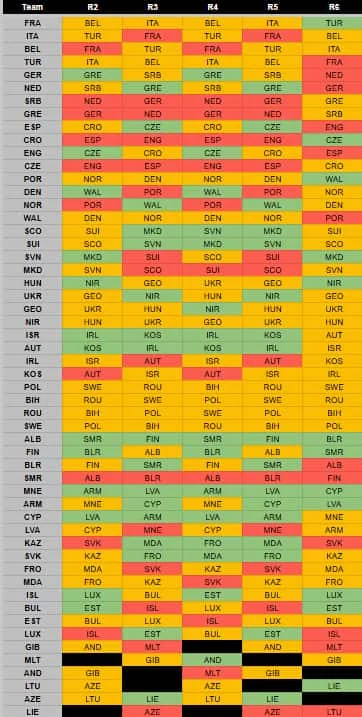
Nations League Fantasy Ticker: Assessing Fixture Difficulty
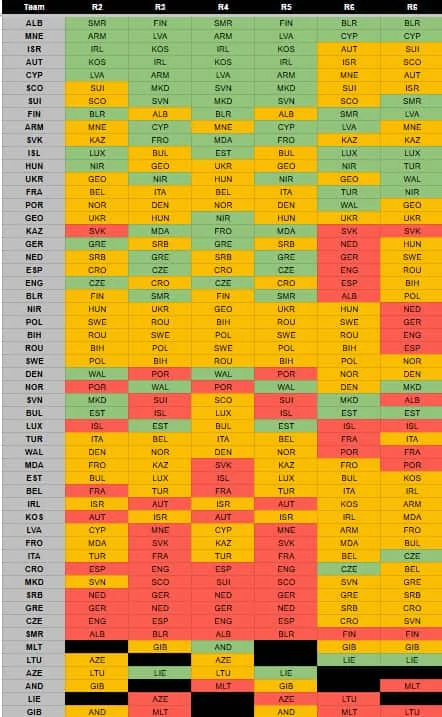
So Who’s Got the Advantage?
Leading the ticker for Rounds 2-6 are teams like Albania, who benefit from favorable matches against underperforming opponents such as San Marino. With fixtures lined up against both Finland and Belarus, Albania’s prospects look promising. Their pathway through the next rounds positions them as a potential surprise star, giving managers a solid option for transfers in.
Montenegro also stands out with an advantageous lineup that includes matches against Armenia and Latvia. These games could see strong performances translating into significant points for those who choose their players wisely. Yet, not everything is turned toward the sunny side; teams like Israel, Austria, and Cyprus round out the top five but face considerable hurdles from tougher competitors like Ireland and Kosovo. The competition remains intense.
On the flip side, teams like Gibraltar, Liechtenstein, Andorra, Azerbaijan, Lithuania, and Malta are dealt challenging fixtures. Their unfavorable schedules translate to a higher likelihood of low-point returns, making them risky selections for fantasy managers. Big names like Czechia and Croatia aren’t in much better positions, facing stiff opposition from teams such as England and Spain.
Future Outlook: What Does It Mean for Managers?
These upcoming fixtures will significantly affect the dynamics within Nations League Fantasy. The analysis suggests a growing divide between the teams that have manageable fixtures and those that have run into a wall of trouble. For many, this is more significant than it looks at first glance. Managers who analyze and adapt quickly will find themselves ahead of their competitors. This could ultimately determine the standings within mini-leagues and competitions.
For those of you working in this space, considering players from nations with easier paths is wise. But be aware of the double-edged sword; as players from struggling teams often hold lower ownership, they could be wild cards under the right circumstances. Strategies based on both team form and fixture difficulty are paramount.
So, whether you're in it for the cash prizes or the thrill of competition, a nuanced approach will be essential. Keep this fixture analysis in mind as it may just save your season.