When FPL transfers become fear management
The most revealing pressure in Fantasy Premier League isn’t an injury or a benched captain. It’s seeing another manager buy the player you were considering, then watching that player score. Suddenly, a decision that seemed sound starts to feel like a mistake.
That’s how FPL can turn into a contest over who gets left behind. I’ve been thinking about it while reviewing my own transfers—and watching Emil, my co-host on Her Fantasy League, spot useful players before I do. Is he making better calls, or just giving me more reasons to worry? The answer matters less than the question: are we choosing players for our teams, or buying reassurance?
Popularity is a signal, not a verdict
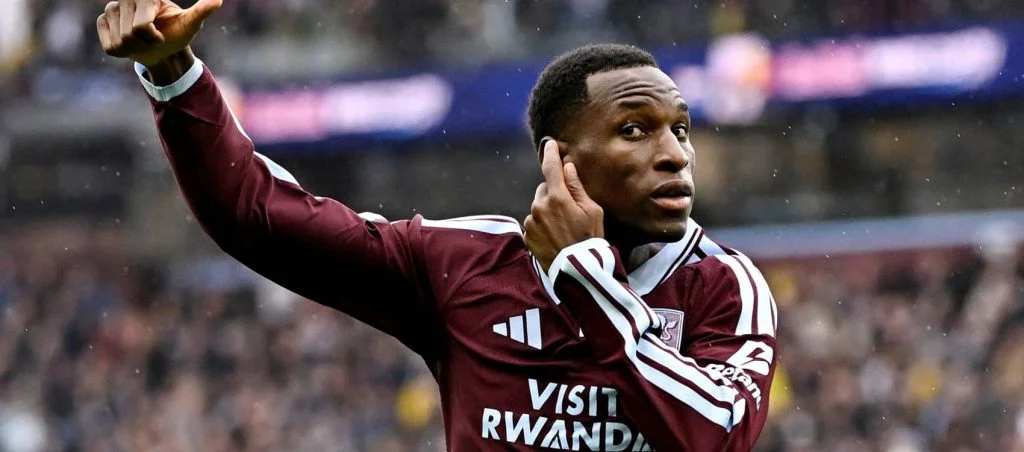
Friday afternoon’s official FPL figures showed Nicolas Jackson nearing 1.4 million purchases and Marcus Tavernier passing 900,000. João Pedro, meanwhile, had been sold 1.8 million times; Riccardo Calafiori and Bukayo Saka were also among the players managers were shedding in large numbers.
Those are substantial moves, and plenty will have sensible explanations: injuries, form, fixtures or price changes. But the crowd’s activity can tell you that a player is worth investigating; it can’t tell you whether he belongs in your squad. A popular transfer may be the right one. Popularity alone is a poor reason to make it.
When a good pick becomes a source of panic
When Alexander Isak’s injury forced Emil to rethink his plans a few Gameweeks ago, he brought in Evanilson. It was a practical choice: an affordable forward with attacking involvement and a fixture run worth considering. Then Evanilson scored 12 points in Gameweek 7. Emil finished on 94 points; I got 84. He was, naturally, very modest about it.
Here’s the psychological trap: before the haul, buying Evanilson looked like a gamble. Afterwards, going without him felt like one. His prospects hadn’t necessarily changed overnight, but his points had—and that can make an interesting option feel like an urgent must-have.
Evanilson may still be a strong pick. Emil’s success with him isn’t evidence that I should buy him now.
Jackson presents the same test. Emil brought in the Aston Villa forward as a replacement for João Pedro, and Jackson’s recent form gives managers a real reason to consider him. Yet more than a million purchases can’t tell us what he’ll score in Gameweek 9. The decision is whether he improves your team enough to justify the transfer.
Would you want Jackson if nobody were talking about him? Do his minutes, attacking numbers and fixtures make the case on their own? If not, the transfer may be calming your nerves rather than fixing your squad.
Price predictions can make waiting feel costly
The official Price Change Predictor adds another source of pressure this season. It tracks players’ progress towards a possible rise or fall and updates the estimated likelihood of a change. That information can help: if a planned transfer might soon become unaffordable, acting early could make sense.
But a prediction can also push a manager into a decision before the evidence is ready. You might want to wait for a press conference, check European minutes or get clearer injury news. Then a possible price rise appears, and patience starts to look dangerous.
The predictor doesn’t guarantee a change, and its indications can shift as transfer activity changes. The real calculation is whether the financial gain from moving now outweighs what you could learn by waiting. Sometimes it does. If a rise would block a transfer you already intend to make, protecting your budget is reasonable. But saving £0.1m isn’t automatically worth buying before a key fitness update.
Team value helps build a stronger squad. It doesn’t earn points by itself.
Buy future opportunity, not last week’s points
A big return is persuasive. A hat-trick, a double-digit score or somebody else’s green arrow can make an immediate transfer feel obvious. But last week’s points are already gone. The useful question is what gives that player a chance to score again.
Look at minutes, role, chances, set pieces, the team’s attacking strength and the opponents ahead. Consider whether a huge haul came from circumstances likely to repeat. Two goals from two difficult chances make for a fine afternoon; they don’t automatically make a player twice as attractive. And a blank after several good opportunities doesn’t necessarily mean it’s time to sell.
Expected goals, chance creation and minutes can help you ask sharper questions. They aren’t guarantees. They’re most useful before a transfer, not as research assembled afterwards to defend one.
Ownership changes how we read the evidence
I’m more forgiving when my own player blanks. His fixtures may be improving; his underlying numbers may look good; perhaps he was unlucky. When Emil owns the player who scores, I find patience harder to come by and start looking for a way to bring him in.
The footballing evidence may be much the same. My tolerance for uncertainty isn’t. We get attached to the players we own, remember the points we missed and imagine how a different transfer might have changed our rank. When the other manager is sitting beside you, that imagined alternative is especially hard to ignore.
Still, a missed haul doesn’t prove you made the wrong decision. Two managers can have sound reasons for choosing different players, and one can score 12 while the other scores two. Sometimes the difference is simply that football happened.
Three questions before making a move
I’m trying to put some distance between the feeling and the transfer by asking myself:
- Would I still make this move if the player had blanked last weekend?
- What specifically gets better in my team?
- What am I giving up?
Every transfer has a cost, even when it’s free. Using a transfer now leaves one fewer for next week. Moving early means taking on more risk before injury news. Spending more on one player may restrict another upgrade. The right comparison includes the alternatives—and doing nothing.
These questions won’t guarantee a good outcome. They can make the reason for a decision clearer, which helps when the result goes the other way.
Discipline means living with uncertainty
There are good reasons popular players become popular: the FPL community sees a lot of information, and sometimes the obvious pick is the best one. Avoiding a player just to be different is no wiser than buying him because everyone else has.
The harder skill is working out when the crowd is reacting to useful evidence and when it’s creating urgency. You have to accept that somebody else’s differential will haul, a player you sold will score, and a price might rise while you wait for better information.
Emil will sometimes make a transfer I wish I’d made first. I can hear him objecting to “sometimes” already. But FPL is a game of decisions under uncertainty, not a contest to eliminate regret. We’ll all miss points. We’ll all make moves that look absurd a week later.
The most dangerous transfer may be the one made because watching someone else succeed without you feels unbearable. So here’s the question for the Scout community: when did you last buy someone because you believed in his next five Gameweeks, and when did you buy because you feared missing a haul? Can you always tell which is which?